Your doctor checks your blood pressure, your cholesterol, your blood sugar. These numbers give you some information about your health. But there’s one measurement that predicts your longevity more powerfully than almost any of these standard markers, and most people never get it tested.
It’s called VO2 max—your maximal oxygen uptake—and it measures your cardiovascular fitness. Research consistently shows that low cardiovascular fitness increases your risk of premature death more than smoking, high blood pressure, or high cholesterol. High cardiovascular fitness is protective even when other risk factors are present.
Yet unlike those other markers that get checked at every annual physical, VO2 max is almost never measured. Most people have no idea what their cardiovascular fitness actually is. They might feel like they’re in decent shape, or maybe they know they’re out of shape, but they’re guessing based on how they feel rather than objective data.
This matters because cardiovascular fitness isn’t just about whether you can run a marathon or climb stairs without getting winded. It’s a window into your overall health, your metabolic function, your aging trajectory, and your risk of chronic disease. It’s information you can act on—improving cardiovascular fitness through structured exercise is one of the highest-value health interventions available.
So what exactly is VO2 max? How is it tested? What do the results mean? And most importantly, what can you do with this information to improve your health and extend your lifespan?
Let’s break it down.
What Is VO2 Max?
VO2 max stands for maximal oxygen uptake. It’s the maximum amount of oxygen your body can take in, transport, and use during intense exercise. It’s measured in milliliters of oxygen per kilogram of body weight per minute (ml/kg/min).
Think of it as your body’s engine capacity. A higher VO2 max means your body is more efficient at taking oxygen from the air you breathe, getting it to your muscles through your cardiovascular system, and using it to produce energy. A lower VO2 max means your system is less efficient—your heart, lungs, blood vessels, and muscles aren’t working together as effectively.
This efficiency matters for everything you do. When you climb stairs, when you chase your kids around the yard, when you go for a hike, when you travel and need to rush through an airport—all of these activities require your body to deliver oxygen to working muscles. The better your cardiovascular system functions, the easier these activities feel and the more capable you are of sustaining effort.
But VO2 max isn’t just about exercise performance. It reflects the health and function of multiple interconnected systems: your heart’s ability to pump blood efficiently, your lungs’ capacity to take in oxygen, your blood vessels’ ability to deliver that oxygen, and your muscles’ ability to use it. When these systems work well together, you have high cardiovascular fitness. When they don’t, your VO2 max is low.
This is why VO2 max is such a powerful predictor of health outcomes. It’s not measuring one isolated variable—it’s measuring how well your entire cardiorespiratory system functions. And that system’s function determines a lot about your health, your longevity, and your quality of life.
Why VO2 Max Matters More Than You Think
Here’s something that surprises most people: cardiovascular fitness is one of the strongest predictors of longevity we have. Stronger than many of the risk factors that doctors focus on routinely.
Research from the Cleveland Clinic analyzing data from over 120,000 patients found that cardiovascular fitness, measured by exercise capacity, was a stronger predictor of death than traditional risk factors including hypertension, diabetes, and smoking. The difference between low fitness and high fitness was stark—having low cardiovascular fitness increased mortality risk more than having any of these other conditions.
Other studies have found similar results. A paper in JAMA examining nearly 5,000 participants found that each 1-MET increase in exercise capacity (roughly equivalent to a 3.5 ml/kg/min increase in VO2 max) was associated with a 12% reduction in mortality risk. The difference between being in the lowest fitness category and the highest was associated with a mortality difference equivalent to decades of life.
Think about that. Being fit provides a mortality benefit larger than controlling blood pressure, managing diabetes, or quitting smoking. Yet how often does your doctor check your cardiovascular fitness? How often is improving fitness emphasized as strongly as lowering cholesterol or blood sugar?
The answer is almost never, which is a massive missed opportunity for prevention.
Cardiovascular Fitness and Chronic Disease
Low cardiovascular fitness isn’t just associated with dying younger. It’s associated with higher rates of cardiovascular disease, metabolic dysfunction, cognitive decline, and reduced quality of life.
People with low VO2 max are more likely to develop heart disease, even when other risk factors are controlled. They’re more likely to develop type 2 diabetes and insulin resistance. They’re at higher risk for cognitive impairment and dementia as they age. They’re more likely to experience functional decline and loss of independence.
Conversely, maintaining high cardiovascular fitness is protective. Even in the presence of other risk factors—even if you’re overweight, or have elevated cholesterol, or have high blood pressure—good cardiovascular fitness reduces your risk substantially.
This doesn’t mean fitness solves everything or that you can ignore other risk factors. But it does mean that improving and maintaining cardiovascular fitness should be a priority for anyone serious about long-term health.
It’s Not Just About Lifespan—It’s About Healthspan
VO2 max doesn’t just predict how long you’ll live. It predicts how well you’ll live. People with higher cardiovascular fitness maintain independence longer, stay active into older age, and report better quality of life.
Think about what allows someone to remain independent and active in their 70s and 80s. It’s not just avoiding major disease. It’s having the physical capacity to do the things they want to do—walk around their neighborhood, travel, play with grandchildren, maintain their home, pursue hobbies.
All of this requires cardiovascular fitness. As VO2 max declines with age (which it does naturally if you don’t work to maintain it), these activities become more difficult. Eventually, they become impossible. The person who can’t climb a flight of stairs without stopping isn’t just dealing with inconvenience—they’re losing independence and quality of life.
Maintaining cardiovascular fitness preserves this functional capacity. It keeps you capable, active, and independent for longer. That’s healthspan—not just years of life, but years of quality life.
How VO2 Max Testing Works
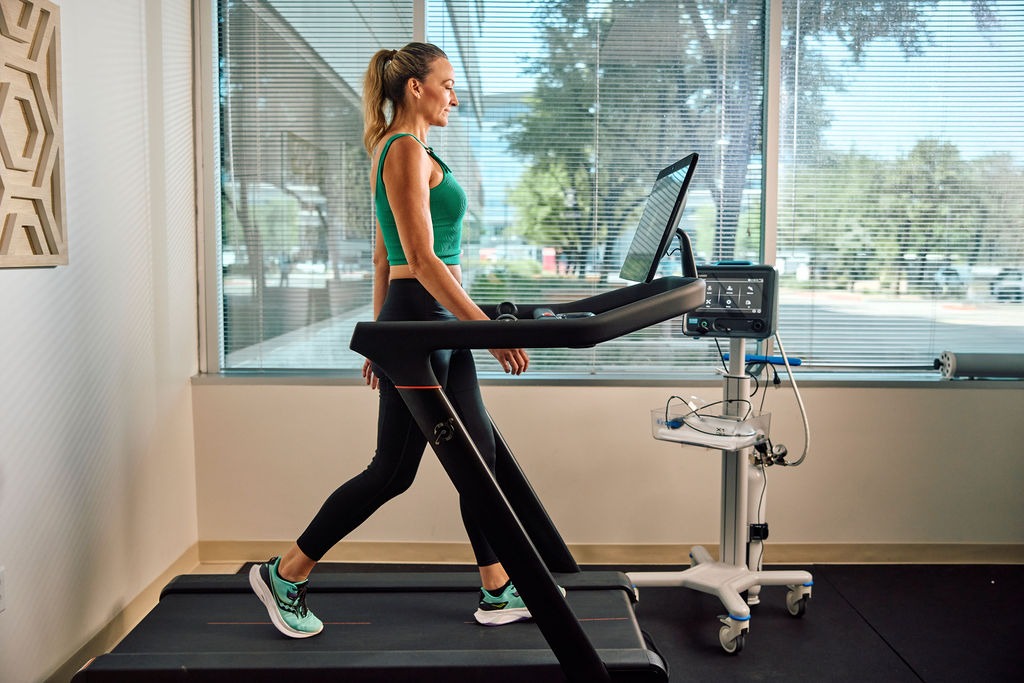
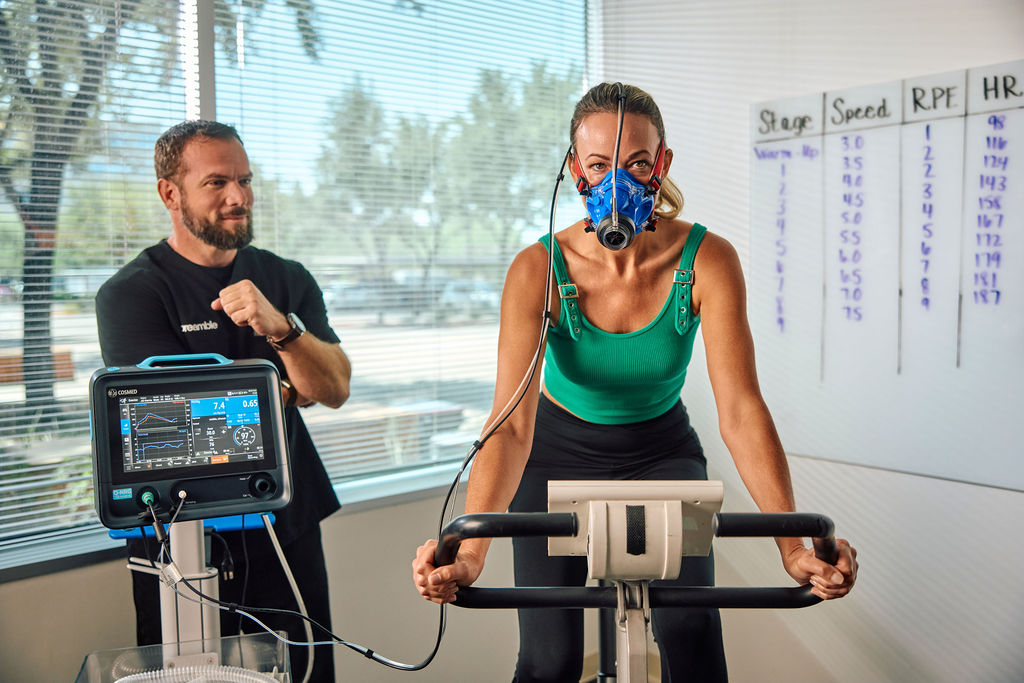
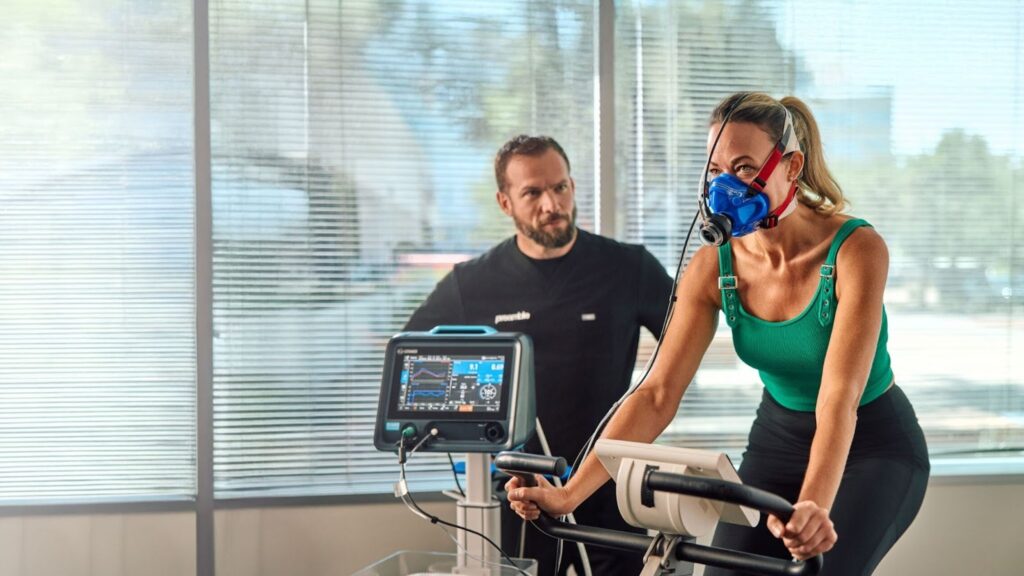
So how do you actually measure VO2 max? The gold standard is a graded exercise test where you exercise on a treadmill or stationary bike while wearing a mask that measures the oxygen you’re breathing in and the carbon dioxide you’re breathing out.
The Testing Protocol
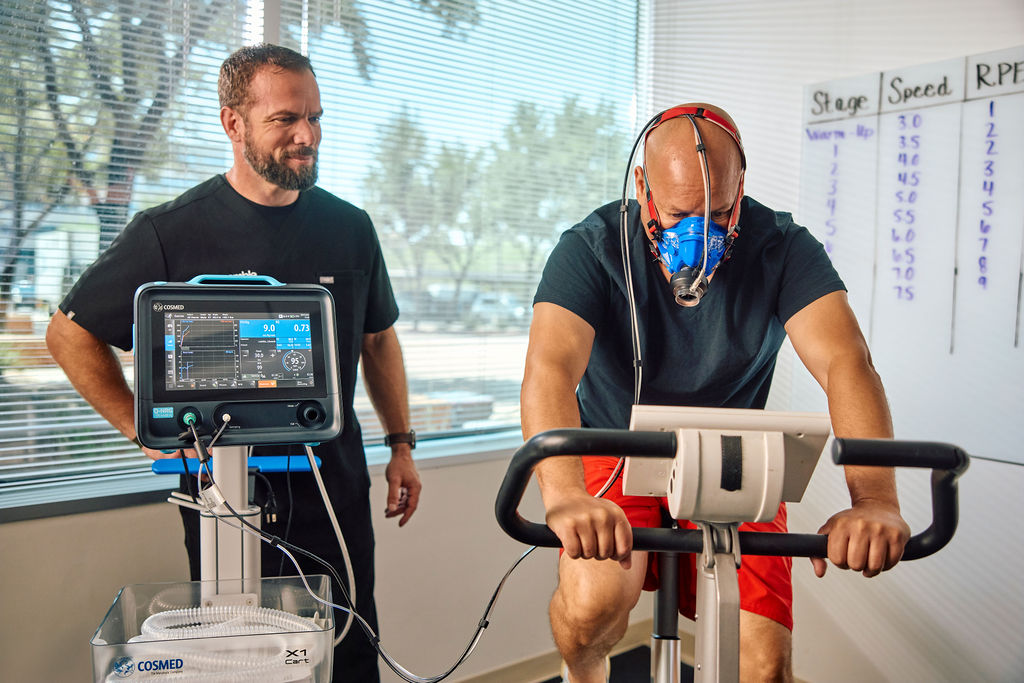
You arrive at the testing facility wearing comfortable athletic clothing and shoes. A technician fits you with a mask that covers your nose and mouth, connected to a metabolic cart that analyzes your breath. You’ll also typically wear a heart rate monitor so the technician can track your heart rate throughout the test.
The test starts easy—maybe a slow walk on the treadmill or low resistance on the bike. Every couple of minutes, the intensity increases. The treadmill might get faster or steeper. The bike resistance might increase. The test gradually gets harder and harder until you reach maximal effort and can’t continue.
Throughout the test, the metabolic cart is measuring how much oxygen you’re consuming and how much carbon dioxide you’re producing. As the intensity increases, your oxygen consumption increases—your body needs more oxygen to fuel the increased work. Eventually, you reach a point where your oxygen consumption plateaus despite increasing exercise intensity. That’s your VO2 max—the maximum amount of oxygen your body can use.
The whole test typically takes 8-15 minutes, with the actual exercise portion being 8-12 minutes. It’s not a comfortable test—you’re pushing to maximal effort—but it’s not dangerous when properly supervised. The technician is monitoring you throughout and can stop the test at any time if needed.
What the Test Measures
The primary measurement is your VO2 max in ml/kg/min—milliliters of oxygen per kilogram of body weight per minute. For example, a moderately fit 45-year-old man might have a VO2 max of 35-40 ml/kg/min. A highly fit athlete might be 55-65 ml/kg/min or higher. Someone sedentary and deconditioned might be 25-30 ml/kg/min.
But the test provides more information than just your peak number. You’re also getting data on your heart rate response, your breathing efficiency, when you cross from aerobic to anaerobic metabolism (your anaerobic threshold or lactate threshold), and how your body responds to increasing intensity.
This additional data helps guide training recommendations. Your anaerobic threshold, for example, is valuable for designing effective training programs. Training at or near this threshold is one of the most efficient ways to improve cardiovascular fitness.
Submaximal Testing Alternatives
Full VO2 max testing requires pushing to maximal effort, which isn’t appropriate for everyone. Older individuals, people with certain health conditions, or those who simply aren’t comfortable with maximal testing can do submaximal testing instead.
Submaximal tests use standardized protocols like the YMCA bike test or the Rockport walking test. You exercise at moderate intensity (not maximal), and your heart rate response is used to estimate your VO2 max. These estimates aren’t as precise as direct measurement, but they provide useful information and are much more accessible.
Many fitness facilities and some healthcare providers offer submaximal testing. While it’s not as accurate as true VO2 max testing, it’s better than having no information at all about your cardiovascular fitness.
Understanding Your VO2 Max Results
So you’ve done the test and you have a number. What does it actually mean? How do you know if your VO2 max is good, average, or poor?
Age and Sex-Adjusted Standards
VO2 max naturally declines with age, and men typically have higher values than women (largely due to differences in muscle mass and hemoglobin levels). So your results need to be interpreted relative to your age and sex.
For men, here are rough guidelines by age:
Ages 20-29:
Excellent: 55+ | Good: 45-54 | Average: 35-44 | Below Average: 25-34 | Poor: <25
Ages 30-39:
Excellent: 52+ | Good: 43-51 | Average: 33-42 | Below Average: 23-32 | Poor: <23
Ages 40-49:
Excellent: 50+ | Good: 40-49 | Average: 30-39 | Below Average: 20-29 | Poor: <20
Ages 50-59:
Excellent: 45+ | Good: 36-44 | Average: 27-35 | Below Average: 18-26 | Poor: <18
Ages 60+:
Excellent: 40+ | Good: 31-39 | Average: 23-30 | Below Average: 15-22 | Poor: <15
For women, values are typically about 10-15% lower due to physiological differences, but the categories work similarly.
These are general guidelines. Individual variation exists, and what matters most is whether you’re improving over time and whether your fitness level supports your health goals.
What Your Number Means for Longevity
Research has established clear relationships between VO2 max categories and mortality risk. Being in the “poor” or “below average” category significantly increases your risk. Being in the “good” or “excellent” category provides substantial protection.
One large study found that being in the lowest fitness quintile (bottom 20%) was associated with mortality risk similar to having diabetes, hypertension, or being a current smoker. Moving from the lowest quintile to even the next category up (still below average, but not the very bottom) was associated with a 50% reduction in mortality risk.
The benefits continue as fitness improves. Each category up in cardiovascular fitness provides additional mortality reduction. Being in the highest fitness categories provides the greatest longevity benefit.
This isn’t just about living to 100. It’s about reducing your risk of dying prematurely from cardiovascular disease, cancer, and other causes. It’s about maintaining independence and quality of life as you age.
The Trajectory Matters
Your absolute VO2 max number matters, but so does your trajectory. If you’re 45 with a VO2 max of 35 ml/kg/min, you’re in the average range. But is that 35 stable, improving, or declining?
VO2 max naturally declines about 10% per decade after age 30 if you do nothing to maintain it. That’s substantial. A 30-year-old with a VO2 max of 45 who doesn’t maintain fitness could be down to 30-32 by age 60. That’s the difference between being capable and active versus struggling with daily activities.
But this decline isn’t inevitable. Regular exercise, particularly activities that challenge your cardiovascular system, can slow or even prevent this decline. Some people maintain or even improve their VO2 max as they age through consistent training.
Testing your VO2 max periodically (annually or every couple years) shows you your trajectory. Are you maintaining fitness as you age? Improving? Declining faster than expected? This information allows you to adjust your approach before significant decline occurs.

What Affects Your VO2 Max
Your VO2 max isn’t fixed—it’s influenced by multiple factors, some you can control and some you can’t.
Genetics: The Starting Point
Genetics account for perhaps 20-30% of the variation in VO2 max between individuals. Some people are naturally gifted with high cardiovascular fitness potential. Others start with lower baseline capacity. This is why elite endurance athletes often have VO2 max values of 70-80+ ml/kg/min—they’ve combined natural talent with extensive training.
But here’s what matters for most people: while genetics determine your potential ceiling, training determines where you are relative to that ceiling. A person with average genetic potential who trains consistently will have much higher cardiovascular fitness than someone with excellent genetic potential who’s sedentary.
You can’t change your genetics, but you can maximize what you have through training. And even modest improvements in VO2 max provide significant health benefits.
Training: The Biggest Factor You Control
Regular cardiovascular exercise is the most powerful way to improve VO2 max. Different types of training affect it in different ways.
High-intensity interval training (HIIT) is particularly effective for improving VO2 max. Sessions where you alternate between hard efforts near maximal intensity and recovery periods challenge your cardiovascular system maximally and drive adaptation. Research consistently shows HIIT produces larger VO2 max improvements than moderate continuous exercise when training time is controlled.
But moderate-intensity continuous training also works. Going for runs, bike rides, or swims at a steady moderate intensity builds cardiovascular fitness through accumulated training volume. For many people, this type of training is more sustainable and enjoyable than high-intensity work.
The best approach often combines both: some high-intensity interval work to maximize cardiovascular stimulus, plus steady moderate-intensity training for volume and sustainability.
Age: The Decline You Can Slow
VO2 max declines with age, averaging about 10% per decade after age 30. This decline reflects changes in maximum heart rate (which decreases), cardiac output, arterial stiffness, and muscle oxidative capacity.
But this average decline masks huge individual variation. Sedentary people lose fitness much faster—potentially 15-20% per decade. Active people who maintain consistent training can slow decline to 5% per decade or less. Some masters athletes maintain VO2 max values comparable to sedentary people 20-30 years younger.
The key is understanding that age-related decline isn’t inevitable—it’s largely a function of declining activity. Stay active, maintain training intensity, and you can preserve cardiovascular fitness remarkably well as you age.
Body Composition
VO2 max is expressed relative to body weight (ml/kg/min), so body composition affects the number. Carrying excess fat weight means you have to move more mass with the same cardiovascular system, which reduces your relative VO2 max.
This is one reason why losing fat often improves VO2 max even without changing training. You’re moving less weight with the same engine capacity, so your relative capacity improves.
Muscle mass also matters. Skeletal muscle is where oxygen is ultimately used to produce energy. More muscle mass with good oxidative capacity supports higher VO2 max.
Other Health Factors
Cardiovascular disease, chronic inflammation, anemia, lung disease, and other health conditions can all reduce VO2 max. If your VO2 max is lower than expected for your age and activity level, it might indicate an underlying health issue worth investigating.
This is part of why VO2 max testing is valuable—it can reveal problems that might not be obvious from standard health screenings.
How to Improve Your VO2 Max
If your VO2 max is lower than you’d like, the good news is it’s trainable. Here’s how to improve it.
The Basics: Consistency and Frequency
You need to challenge your cardiovascular system regularly. This means cardiovascular exercise at least 3-4 days per week, ideally 4-6 days. Consistency matters more than any single hard workout. Your cardiovascular system adapts to regular stimulus.
This doesn’t mean every workout has to be punishing. A mix of intensities and durations works well. Some days high intensity, some days moderate intensity, some days easy recovery. The variety challenges different energy systems and prevents overtraining while maintaining regular stimulus.
High-Intensity Interval Training (HIIT)
HIIT is the most time-efficient way to improve VO2 max. A typical HIIT session might involve 4-8 intervals of 3-5 minutes at an intensity that’s hard but sustainable for that duration (roughly 90-95% of max heart rate), with equal or slightly longer recovery periods between intervals.
For example: 5 minutes easy warm-up, then 5 x 4 minutes hard with 3 minutes easy recovery between, then 5 minutes easy cool-down. Total time: about 45 minutes, with 20 minutes of high-intensity work.
You don’t need to do this every day—2-3 HIIT sessions per week combined with other training is plenty for most people. More isn’t necessarily better; recovery between hard sessions is important for adaptation.
Threshold Training
Training at or near your anaerobic threshold (the intensity where lactate begins to accumulate faster than your body can clear it) is also highly effective. This is typically sustainable for 20-60 minutes and feels “comfortably hard”—you can speak in short sentences but not hold a conversation.
Threshold training improves your body’s ability to use oxygen efficiently and clear lactate, which supports higher sustainable work rates and contributes to VO2 max improvement.
Base Building with Moderate Intensity
Don’t neglect moderate-intensity continuous training. Longer sessions at a moderate pace (where you can hold a conversation, maybe 65-75% of max heart rate) build aerobic base, improve fat oxidation, and increase training volume without the recovery demands of high-intensity work.
These sessions might be 30-90 minutes depending on your fitness level and goals. They feel relatively easy but accumulate significant training stimulus.
Strength Training as Support
While strength training doesn’t directly improve VO2 max the way cardiovascular exercise does, it supports cardiovascular fitness by maintaining or building muscle mass, improving movement efficiency, and preventing injury that would disrupt training.
Include 2-3 strength training sessions per week focusing on major movement patterns. This doesn’t have to be separate from cardiovascular training—circuit training that combines strength exercises with minimal rest can provide both strength stimulus and cardiovascular challenge.
Progression and Patience
Improving VO2 max takes time. Beginners might see significant improvements in 8-12 weeks of consistent training. More trained individuals will see slower but continued improvement over months to years.
The key is progressive overload—gradually increasing training volume, intensity, or frequency over time. Your cardiovascular system adapts to the training stimulus you provide. As you get fitter, you need to increase that stimulus to continue improving.
But progression needs to be gradual. Increasing too quickly leads to overtraining, injury, or burnout. A common guideline is increasing weekly training volume by no more than 10% per week.
VO2 Max Testing: Who Should Get It?
Not everyone needs formal VO2 max testing, but it’s valuable for several groups of people.
Anyone Serious About Improving Fitness
If you’re training to improve cardiovascular fitness, baseline VO2 max testing provides objective data on where you’re starting. Follow-up testing (every 6-12 months) shows whether your training is actually working. You’re not guessing based on how you feel—you have concrete evidence of improvement.
This is especially valuable if you’ve been training consistently but aren’t sure if you’re seeing results. VO2 max testing removes the guesswork.
People Over 40 Focused on Longevity
Given how strongly cardiovascular fitness predicts longevity and healthspan, anyone over 40 who’s serious about long-term health should know their VO2 max. It’s one of the most important health metrics you can track, yet it’s almost never included in standard health screenings.
If you’re getting comprehensive preventative health screening, VO2 max testing should be part of it. The information helps guide exercise recommendations and provides a target for improvement.
Athletes Optimizing Performance
Athletes and serious recreational exercisers benefit from knowing not just their VO2 max, but their anaerobic threshold and other metabolic data that comes from testing. This information helps design optimal training programs and track progress toward performance goals.
For endurance athletes in particular—runners, cyclists, triathletes, rowers—VO2 max and threshold testing provide valuable benchmarks and training targets.
Anyone with Cardiovascular Risk Factors
If you have multiple cardiovascular risk factors, knowing your actual cardiovascular fitness provides important context. You might have elevated cholesterol or blood pressure, but if you also have excellent cardiovascular fitness, your overall risk profile is better than the numbers alone would suggest.
Conversely, if your risk factors are “fine” but your cardiovascular fitness is poor, that’s important information that changes how aggressively you should address those seemingly minor issues.
Beyond the Number: What to Do with Your Results
Getting your VO2 max tested is just the first step. The value comes from using that information to improve your health.
Setting Appropriate Training Targets
Your test results, particularly your anaerobic threshold, provide specific heart rate or power targets for training. Instead of guessing whether your workouts are hard enough or too hard, you have objective zones to work in.
This makes training more efficient. You’re not wasting time training too easy to provide sufficient stimulus, and you’re not constantly overreaching and risking burnout.
Tracking Progress Over Time
Retest every 6-12 months to see if your training is working. If your VO2 max is improving, your current approach is effective. If it’s stagnant or declining, you need to adjust something—training frequency, intensity, volume, or recovery.
This objective feedback is invaluable. Many people train consistently but don’t see the improvements they expect because their training doesn’t provide the right stimulus. Testing reveals this so you can make informed adjustments.
Understanding Your Health Trajectory
VO2 max is a window into your aging trajectory. Are you maintaining cardiovascular fitness as you age, or are you declining faster than expected? This information helps you understand whether your current lifestyle is supporting healthy aging or accelerating decline.
If you’re 50 with a VO2 max typical of an average 65-year-old, that’s a wake-up call. If you’re 50 with a VO2 max typical of a fit 35-year-old, you’re doing something right and should maintain those habits.
Motivation and Accountability
There’s something powerful about having an objective number to improve. Knowing your VO2 max is 35 ml/kg/min and setting a goal to get it to 40 provides concrete motivation. It’s not vague “get in better shape”—it’s a specific, measurable target.
This objective measurement also creates accountability. You can’t fool a VO2 max test. If you haven’t been training consistently or effectively, your results will reflect that. It’s honest feedback that helps you stay on track.
The Bottom Line on VO2 Max
Your cardiovascular fitness, measured by VO2 max, is one of the most powerful predictors of how long you’ll live and how well you’ll live. It matters more than many of the health markers that get checked routinely at annual physicals. Yet most people have no idea what their VO2 max is because it’s almost never tested.
This is a missed opportunity. VO2 max is measurable, it’s trainable, and improving it provides significant health benefits. It’s not just about exercise performance—it’s about reducing disease risk, maintaining independence, and optimizing your health trajectory as you age.
If you’re serious about your health, knowing your cardiovascular fitness and working to improve it should be a priority. It’s one of the highest-value health interventions available, and it’s something you can control through consistent, structured training.
You can’t optimize what you don’t measure. Get tested, set targets, train consistently, and track progress. Your future self will thank you.
Get Your VO2 Max Tested at Preamble Health
At Preamble Health, VO2 max testing is a core component of our comprehensive health assessments. We use this objective measurement of cardiovascular fitness to help you understand your health trajectory and design personalized exercise recommendations.
Whether you’re an athlete optimizing performance, someone focused on longevity, or anyone who wants to know how fit they actually are, VO2 max testing provides invaluable data you can act on.
Ready to measure your cardiovascular fitness?
- Schedule VO2 max testing
- Learn about our comprehensive health screenings
- Explore our Medicine 3.0 approach to preventative care
- Read about DEXA scans for body composition analysis
Related resources: