
You’ve been going to the doctor for annual checkups your entire adult life. Blood pressure check, maybe some blood work, a few minutes of conversation, and you’re done. The doctor says everything looks “normal,” and you leave feeling… fine, but not particularly informed about your actual health.
Then you hear about executive physicals—comprehensive health assessments that take hours instead of minutes and cost anywhere from $1,500 to $10,000 or more. And you wonder: What exactly am I getting for that money? Is it really that different from my regular physical? And most importantly, is it worth it?
These are fair questions. After all, we’re told our annual checkup is supposed to be keeping us healthy. So what’s missing?
In this guide, we’ll break down exactly what separates an executive physical from a standard annual exam, why those differences matter for your long-term health, and how to determine if investing in one makes sense for you.
What’s Included in a Standard Annual Physical?
Let’s start with what most people get from their regular doctor visit. Understanding the baseline helps us appreciate what’s different about an executive physical.
The Typical Annual Checkup
Your standard annual physical usually follows a pretty predictable pattern. You arrive at your doctor’s office and spend time in the waiting room. A nurse takes your vital signs—height, weight, blood pressure, pulse. You might get sent for basic blood work, either before or after your appointment.
Then you see your doctor for somewhere between 10 and 20 minutes. They review your vital signs, ask if anything’s bothering you, maybe listen to your heart and lungs, and tell you that everything looks “normal” based on your lab results from last year (or they’ll call you when this year’s results come back). If you have a specific complaint, they might address it. If not, you’re on your way.
Standard Lab Work: The Basics
The blood panel from a typical physical usually checks about 10-15 markers. You’re getting a complete blood count to check for anemia or infection. A basic metabolic panel looks at electrolytes, kidney function, and blood sugar. A lipid panel checks your total cholesterol, LDL, HDL, and triglycerides. Maybe liver enzymes if your doctor is thorough.
If you’re over a certain age or have risk factors, you might also get screened for diabetes with a hemoglobin A1C test. That’s about it.
What’s Missing?
Here’s the problem: this approach is designed to catch disease after it’s already developed, not to prevent it from starting. Your blood sugar is “normal” until it isn’t, at which point you’ve had insulin resistance for years. Your cholesterol looks “fine” according to standard ranges, but those ranges are based on average Americans—many of whom are unhealthy.
The standard physical answers one question: “Do you have a diagnosable disease right now?” It doesn’t answer: “What diseases are you heading toward?” or “How can we optimize your health trajectory?”
There’s also the time factor. Your doctor is trying to address your concerns, review your labs, and provide recommendations in 15 minutes or less. That’s not enough time for a comprehensive health discussion, and most doctors know it. They’re doing their best within a system that doesn’t value or reimburse preventative care.
What’s Included in an Executive Physical?
An executive physical takes a completely different approach. Instead of a quick checkup, you’re getting a comprehensive health assessment.
The Time Difference
Let’s talk about what happens when your healthcare provider actually has time to focus on your health. Instead of 15 minutes with your doctor, an executive physical usually involves 30-60 minutes of direct physician consultation, plus additional time with nurses, health coaches, or other specialists.
This isn’t rushed. There’s time to discuss your health history in detail, your family history, your lifestyle factors, your goals, and your concerns. There’s time to actually explain what your test results mean and what to do about them. There’s time to develop a personalized health plan rather than generic advice.
Comprehensive Blood Work
Remember those 10-15 markers from your standard physical? An executive physical typically tests 30-50+ biomarkers, sometimes even more.
You’re still getting the basics, but now we’re adding advanced lipid panels that look at particle size and count, not just total cholesterol. We’re measuring inflammatory markers like high-sensitivity C-reactive protein because inflammation drives chronic disease. We’re checking insulin levels, not just blood sugar, so we can catch metabolic dysfunction years before diabetes develops.
Hormone panels assess testosterone, estrogen, thyroid function in detail (not just TSH), and sometimes cortisol and other stress hormones. Nutrient status gets evaluated—vitamin D, B vitamins, magnesium, omega-3 levels. We’re looking at liver function in detail, kidney function comprehensively, and markers of metabolic health that never show up on standard panels.
This isn’t testing for the sake of testing. Every marker serves a purpose: identifying risk factors, optimizing health, or catching dysfunction before it becomes disease.
Advanced Diagnostics and Imaging
This is where executive physicals really differentiate themselves. You’re not just getting blood work—you’re getting objective measurements of your body composition, cardiovascular fitness, and sometimes even early disease detection.
DEXA scans provide precise body composition analysis, showing you exactly how much muscle mass you have (and where you’re losing it), your bone density, and critically, your visceral fat—the dangerous fat around your organs that drives metabolic disease. This is infinitely more useful than stepping on a scale or calculating your BMI.
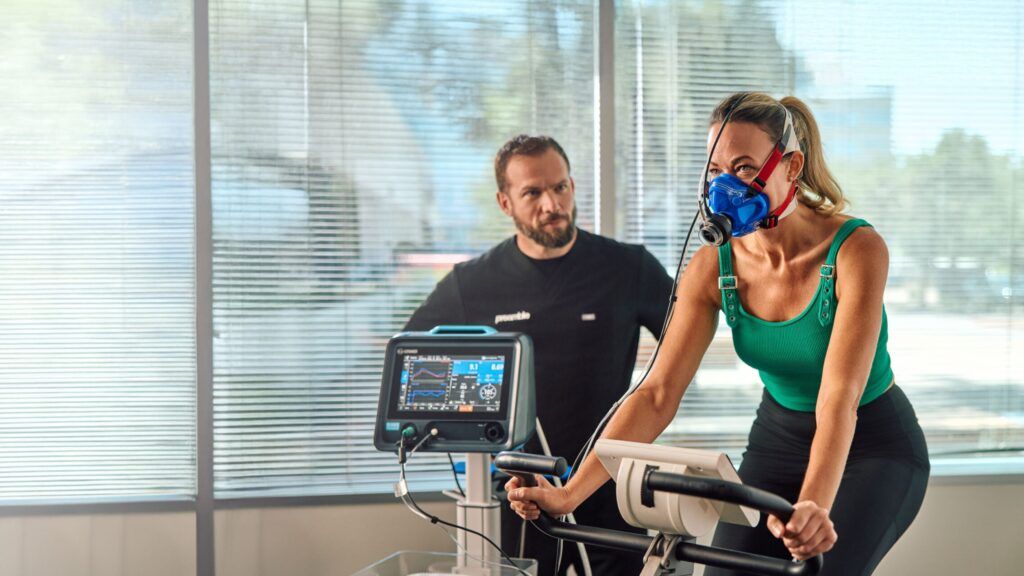
VO2 max testing measures your cardiovascular fitness objectively. This matters because cardiovascular fitness is one of the strongest predictors of longevity we have. Low VO2 max increases your risk of premature death more than smoking, high blood pressure, or high cholesterol. Yet it’s never tested in a standard physical.
Some executive physicals include cardiovascular imaging like coronary calcium scoring, which can detect arterial calcification years before you’d have symptoms. Others include carotid ultrasound to assess arterial health, EKGs, or even advanced cardiac stress testing.
Depending on the program, you might also get cognitive assessment, sleep evaluation, metabolic testing, genetic analysis, or cancer screening beyond standard colonoscopy and mammograms.
Preventative Focus
The entire orientation is different. A standard physical asks “What’s wrong?” An executive physical asks “What can we optimize?” and “What problems can we prevent?”
You’re not just leaving with lab results. You’re leaving with a comprehensive health plan that addresses exercise, nutrition, sleep, stress management, and any necessary medical interventions. You’re getting specific, personalized recommendations based on your data, not generic health advice.
Many executive physical programs also include follow-up consultations to review progress, adjust your plan, and ensure you’re actually implementing the recommendations. This ongoing support often makes the difference between knowing what you should do and actually doing it.
The Key Differences: Side by Side
Let me paint a clearer picture by comparing two scenarios. Both involve a 52-year-old businessman who feels fine and has no obvious health problems.
Scenario 1: Annual Physical with Primary Care Doctor
He schedules his annual checkup. The appointment takes about 15 minutes. Blood pressure is slightly elevated at 135/85 but “not too bad.” Standard blood work shows total cholesterol of 215, which the doctor notes is “a little high” but suggests “let’s keep an eye on it.” Fasting glucose is 98—within normal range. The doctor says everything looks fine and to come back next year.
He leaves feeling okay but not particularly informed. Should he be worried about his blood pressure? What does “keep an eye on it” mean for his cholesterol? Is there anything he should actually do differently?
Scenario 2: Executive Physical
He books a comprehensive executive physical. The process starts with detailed health questionnaires before his appointment. On the day of his exam, he goes through various assessments.
His blood work reveals that while his total cholesterol is 215, his LDL particle count (ApoB) is significantly elevated, indicating much higher cardiovascular risk than his total cholesterol suggests. His fasting glucose is 98, but his fasting insulin is 18—triple what it should be, indicating insulin resistance that hasn’t progressed to diabetes yet. High-sensitivity CRP shows elevated inflammation.
The DEXA scan reveals that despite a “normal” BMI of 26, he has excessive visceral fat—the dangerous fat around his organs. His muscle mass is in the bottom 30th percentile for his age, indicating sarcopenia (age-related muscle loss) is already beginning. His bone density shows early signs of osteopenia.
VO2 max testing shows his cardiovascular fitness is in the “fair” category, which doubles his risk of premature death compared to someone in the “good” category.
During his physician consultation, these findings are explained in detail. He learns that he’s on a trajectory toward diabetes, cardiovascular disease, and potentially early mortality—but he’s catching these problems 5-10 years before they’d be diagnosed as disease. This is the window where intervention is most effective.
He leaves with a specific plan: a structured resistance training program to rebuild muscle mass, targeted dietary changes to improve insulin sensitivity and reduce visceral fat, a walking routine to improve cardiovascular fitness, and potentially medication to address his cardiovascular risk. He has follow-up appointments scheduled to track progress and adjust the plan.
Six months later, his fasting insulin has dropped to 8, he’s lost 15 pounds of visceral fat while gaining 8 pounds of muscle, his inflammatory markers have normalized, and his VO2 max has improved by 15%. He’s reversed metabolic dysfunction and dramatically reduced his disease risk.
What Made the Difference?
It wasn’t just more testing. It was the combination of comprehensive assessment, adequate time for analysis and explanation, and personalized intervention with follow-up support. The first approach would have let him continue down a path toward disease. The second caught problems early and reversed them.

Who Should Consider an Executive Physical?
Executive physicals aren’t for everyone, and that’s okay. But they’re particularly valuable for certain groups of people.
High-Risk Individuals
If you have a family history of heart disease, diabetes, cancer, or Alzheimer’s, you’re starting with elevated risk. An executive physical helps you understand your specific risk factors and take action before following the same path as your relatives. Genetic predisposition isn’t destiny, but it does mean you need more information and earlier intervention.
People with multiple risk factors—obesity, high blood pressure, high cholesterol, sedentary lifestyle, high stress, poor sleep—benefit enormously from comprehensive assessment. When several risk factors combine, your disease risk doesn’t just add up, it multiplies. An executive physical helps you understand which factors matter most for you and how to address them systematically.
Busy Professionals and Executives
If your schedule makes it hard to coordinate multiple appointments, an executive physical accomplishes in one comprehensive visit what might otherwise require scheduling with multiple specialists over several months. You’re getting your annual checkup, preventative screening, optimization assessment, and health planning done efficiently.
More importantly, if your career demands peak performance, you need to maintain both immediate function and long-term health. You can’t afford to wait until disease develops and forces you to slow down. An executive physical helps you stay at the top of your game while building resilience for decades to come.
Anyone Over 40
The risk of chronic disease accelerates after 40. This is when the choices you make have outsized impact on your health trajectory for the next several decades. What you do in your 40s and 50s largely determines whether you’re healthy and active in your 70s and 80s or managing multiple chronic conditions.
An executive physical in your 40s can catch problems like insulin resistance, cardiovascular dysfunction, hormone decline, muscle loss, and bone density issues when they’re still reversible. Wait until your 60s, and many of these problems become much harder to fix.
People Who Feel Fine But Want to Optimize
Here’s something many people miss: you can feel completely fine while early disease processes are underway. Arterial plaque accumulates silently. Insulin resistance develops over years before becoming diabetes. Muscle loss happens gradually. Bone density declines without symptoms until you break something.
An executive physical is for people who understand that feeling okay isn’t the same as being optimally healthy. If you want to maximize your healthspan—the years you’re active, independent, and mentally sharp—you need data and a plan, not just reassurance that you’re “fine.”
The Cost Question: Is It Worth It?
Let’s address the elephant in the room. Executive physicals typically cost between $1,500 and $10,000 depending on what’s included and where you are. That’s not pocket change for most people. So is it worth it?
The Math of Prevention vs Treatment
Consider what chronic disease actually costs. The lifetime cost of diabetes averages around $300,000 in medical expenses and lost income. A heart attack costs $50,000-100,000 in immediate medical care, plus potential disability, lost work, medications, and follow-up procedures. Cancer treatment can easily exceed $100,000. Dementia care costs around $350,000 from diagnosis until death.
If an executive physical helps you prevent or delay any of these conditions by even a few years, the financial return is massive. But more importantly, there’s no price you can put on avoiding the suffering, loss of independence, and shortened lifespan that come with chronic disease.
What You’re Really Paying For
You’re not just paying for tests. You’re paying for time with experienced physicians who can interpret those tests in context and create a personalized plan. You’re paying for early detection when problems are still reversible. You’re paying for optimization guidance that helps you feel and perform better now while protecting your future.
Think of it less as a medical expense and more as an investment in your most important asset—your health. Every dollar you invest in prevention saves you multiple dollars in future medical costs, but more importantly, it buys you quality of life.
The Insurance Reality
Most insurance won’t cover executive physicals because they’re preventative, not treating diagnosed disease. This is frustrating but reflects how our healthcare system is structured around reactive care rather than prevention.
Some people use HSA or FSA funds to cover part or all of the cost. Others view it as a direct investment in their health, like paying for a gym membership or buying organic food—except with dramatically more impact.

Common Concerns and Misconceptions
“My doctor says I’m healthy, so I don’t need this”
Your doctor is probably right that you don’t have diagnosable disease right now. But that’s different from being optimally healthy or being on a good trajectory. An executive physical finds problems in the 5-10 year window before they become diagnosable disease. That’s the window where intervention is easiest and most effective.
“I feel fine, so I must be healthy”
This is one of the most dangerous assumptions people make. You can feel completely fine while insulin resistance progresses, arterial plaque accumulates, muscle mass declines, and bone density decreases. These processes happen slowly and silently. By the time you don’t feel fine, you’re dealing with disease, not just dysfunction.
“I can’t afford it”
This is a legitimate concern not to be minimized. But we encourage you to consider whether you can afford not to invest in prevention. The cost of chronic disease—financially, physically, emotionally—is far higher than the cost of preventing it.
If the full comprehensive exam is out of reach, consider what elements you can access affordably. Many of the most valuable tests like DEXA scans, VO2 max testing, and advanced blood panels can be done separately for a few hundred dollars. It’s not the full experience, but it’s better than nothing.
“I don’t have time for a 4-hour appointment”
If you don’t have 4 hours to invest in your health, your priorities need adjustment. We say that with empathy—we know life is busy. But you’ll find time to manage chronic disease if you develop it. Wouldn’t you rather invest that time in prevention?
Also consider that one comprehensive visit replaces what would otherwise require coordinating multiple appointments with different specialists over several months. An executive physical is actually more time-efficient than the alternative.
What to Look for in an Executive Physical Program
Not all executive physicals are created equal. If you’re going to invest in one, here’s what to look for.
The program should include truly comprehensive lab work—not just 5 extra tests beyond a standard panel, but 30-50+ markers covering metabolic health, inflammation, hormones, and nutrients. Body composition analysis via DEXA scan is essential because it reveals visceral fat and muscle mass that scales and BMI completely miss. Cardiovascular fitness testing gives you objective data on one of the strongest predictors of longevity.
You want substantial time with an experienced physician who can interpret your results in context and create a personalized plan. If you’re just getting a report with little or no physician consultation, you’re missing half the value.
The program should be oriented toward prevention and optimization, not just screening for disease. You’re not just looking for problems—you’re identifying opportunities to improve your health trajectory.
Follow-up support makes a huge difference. Knowing what you should do and actually doing it are very different things. Programs that include follow-up consultations, progress tracking, and plan adjustments tend to produce much better outcomes.
Finally, look for a practice that understands you’re a whole person, not just a collection of lab values. The best programs consider your lifestyle, your goals, your constraints, and your preferences when creating your health plan.
Making the Decision
Deciding whether to invest in an executive physical is personal. It depends on your health status, your risk factors, your goals, and your resources.
Ask yourself these questions: Do I have family history of chronic disease? Am I over 40? Do I have multiple risk factors? Am I focused on performing well now while protecting my future? Do I want objective data about my health trajectory rather than just reassurance that I’m “fine”?
If you answered yes to several of these questions, an executive physical is probably worth serious consideration. The earlier you catch problems, the easier they are to fix. The more information you have, the better decisions you can make.
And remember: this isn’t an all-or-nothing proposition. Even if a full executive physical isn’t in the budget right now, you can start with elements like comprehensive blood work or a DEXA scan. Some information is better than none, and any investment in understanding your health is worthwhile.
The Bottom Line
The difference between a standard annual physical and an executive physical isn’t just the number of tests or the time spent. It’s the entire philosophy of care.
A standard physical asks if you’re sick. An executive physical asks how healthy you can become and what problems you can prevent. A standard physical treats you like a checklist. An executive physical treats you like a complex system that deserves comprehensive analysis and optimization.
Is it worth the investment? If you value your health, if you want to perform at your best, if you want to avoid chronic disease rather than managing it, then yes. The question isn’t whether prevention is worth investing in. The question is whether you’re willing to prioritize it.
Your health is the foundation for everything else in your life. How much is that worth?
Experience the Difference at Preamble Health
At Preamble Health, our comprehensive Medicine 3.0 Executive Physical goes far beyond the standard checkup. We combine advanced diagnostics, substantial physician consultation time, and personalized health optimization plans to help you prevent disease and maximize performance.
Our Medicine 3.0 approach means we’re not just looking for problems—we’re identifying opportunities to improve your health trajectory for the next several decades.
What’s included in our Medicine 3.0 Executive Physical:
- Comprehensive blood work (100+ biomarkers)
- DEXA scan for body composition and bone density
- VO2 max testing for cardiovascular fitness
- Extended physician consultation
- Personalized health optimization plan
- Follow-up support and progress tracking
Ready to invest in your health?
- Learn more about our Medicine 3.0 Executive Physical
- Schedule a consultation to discuss your health goals
- Explore our other services including DEXA scans and advanced blood work