Why Precision Matters for Athletic Performance
For athletes and high performers, progress isn’t just about pushing harder—it’s about tracking smarter. Whether you’re training for endurance, strength, or recovery, your body is your most valuable asset. And yet, many athletes still rely on outdated tools like BMI, scales, or visual estimates to assess their progress.
Even the most dialed-in training plan loses effectiveness without proper feedback. Performance is influenced by far more than what you see in the mirror—hydration status, inflammation, body composition, and bone resilience all play roles. That’s why Preamble’s concierge approach to health offers a 360-degree view. We equip athletes not just to perform—but to understand what’s happening behind every lift, sprint, or mile logged.
DEXA Scans: A Next-Level Look at the Athletic Body
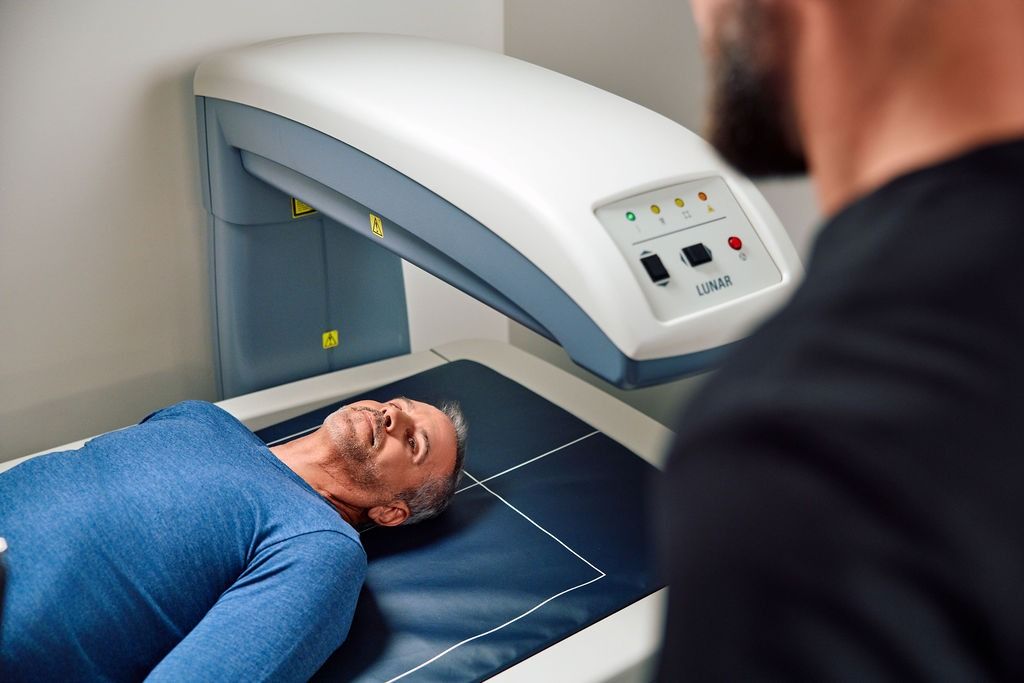
A DEXA (Dual-Energy X-ray Absorptiometry) scan is a hospital-grade diagnostic that uses low-dose X-rays to measure fat mass, lean muscle, and bone density with high accuracy. While originally developed to track bone loss, DEXA has emerged as a performance powerhouse for athletes of all levels.
With DEXA, athletes can see how their body responds to different phases of training, nutrition changes, or recovery strategies. For example, if you’re cutting for competition or bulking in the off-season, a DEXA scan will show whether you’re losing muscle or gaining fat—and where. These insights inform smarter, more precise decision-making, whether you’re tweaking macros or adjusting training volume.
Why Every Athlete Needs a Health Concierge
Serious athletes don’t guess their macros or training cycles—they optimize them. That same philosophy should apply to body composition. A health concierge model, like the one we use at Preamble, puts that kind of precision and personalization into every phase of your performance plan.
Think of a health concierge as your performance strategist—someone who understands your data, your goals, and your physiology. At Preamble, we guide athletes with the same individualized support as elite sports science labs, but with the accessibility of local care. From diagnostics to execution, your plan is built for you, by experts who know how to drive measurable gains.
Pairing DEXA With VO2 Max, RMR, and Performance Testing
At Preamble, we don’t stop at one scan. Our athletic clients often combine their DEXA scans with other advanced tests that round out the full picture of performance:
- VO2 Max Testing ($229) – The gold standard for aerobic capacity, endurance, and cardiovascular efficiency. Essential for runners, cyclists, and tactical athletes.
- Ramp Test + VO2 Max ($299) – Gradual testing for optimal accuracy in determining training zones and aerobic thresholds.
- Resting Metabolic Rate (RMR) & RER ($149) – Discover your true calorie burn at rest and how your body metabolizes fat vs. carbs.
- Lactate Testing (Add-on: $129) – For athletes needing to fine-tune high-intensity training and threshold zones.
When combined, these tests build a layered understanding of your athletic capacity. We use them to map out custom performance plans that account for both endurance and strength—bridging physiology with functional output. That’s the health concierge difference: smart metrics paired with smarter action.
What DEXA Reveals That Training Apps and Wearables Can’t
Apps and wearables are great for tracking workouts, but they can’t measure internal change. DEXA scans provide answers you can’t get from your smartwatch:
- Which muscles are growing—and which aren’t
- Whether you’re gaining fat during a bulking phase—or truly adding lean mass
- If you’re at risk of stress fractures or bone loss from underfueling or overtraining
- Whether your training split is actually rebalancing imbalances or reinforcing them
Many athletes use wearables for surface metrics like heart rate or calories burned, but they fall short in body composition analysis. DEXA closes that gap. With every scan, Preamble helps athletes align performance data with physiological change—ensuring that what’s happening on the field matches what’s happening in the body.
How Often Should Athletes Get a DEXA Scan?
For athletes in training cycles or body recomposition phases, we recommend a DEXA scan every 2–3 months. This cadence aligns with most strength or endurance programming blocks and allows for meaningful comparison without over-testing.
Routine scans become your performance checkpoints. If you’re training hard but not seeing the right body comp shifts, it’s time to adjust. Our team uses this cadence to ensure athletes stay on track, avoid plateaus, and prevent burnout. Think of it like periodizing your diagnostics—planned, purposeful, and powerful.
Why Scottsdale Athletes Choose Preamble
Our clients don’t want transactional care—they want transformation. That’s why we’ve built our entire clinic around the health concierge model: access to advanced diagnostics, expert interpretation, and physician-led strategy, all under one roof.
Scottsdale is home to high achievers who value data, innovation, and optimization. At Preamble, we match that energy with precision tools and elite-level support. Whether you’re an executive managing stress and stamina or a triathlete dialing in your next peak, we meet you where you are—and elevate you from there.
Ready to Train Smarter? Start With a DEXA Scan at Preamble
If you’re ready to elevate your training with real data, a DEXA scan is your first step. From there, we’ll help you design a strategy that supports your goals, reduces your risk of injury, and maximizes your gains.
Performance is personal. Your diagnostics should be too. With Preamble’s health concierge model, you don’t just get a scan—you get a roadmap. Ready to find your edge? Schedule your consultation and let’s put performance science to work for you.