VO2 Max is one of the most clinically validated indicators of health resilience and disease prevention. It measures the volume of oxygen your body can use during exercise, reflecting the efficiency of your heart, lungs, and cells. A high VO2 Max score suggests your body is functioning at a high level, while a low score may signal inefficiencies in how your body handles energy, stress, and recovery.
The best part? VO2 Max is trainable. It responds to structured movement, recovery, and metabolic conditioning. But seeing real progress—especially if you’re over 40—requires more than just jogging a little longer each week. It requires precision, intention, and consistency. It also requires a strategy that’s designed for your unique physiology, fitness level, and health goals.
Improving VO2 Max is not just about optimizing workouts. It’s about crafting personalized health plans that align with your current state and your long-term vision for healthspan. This article outlines the actionable ways to build that plan—from testing and training to recovery and retesting—and how you can use it to increase endurance, reduce disease risk, and stay stronger as you age.
Why VO2 Max Matters for Long-Term Health
VO2 Max—short for “volume of oxygen maximum”—is a measurement of how much oxygen your body can consume and convert into usable energy during peak effort. A higher VO2 Max means your cardiovascular and respiratory systems are delivering oxygen to your muscles more efficiently, which supports performance, stamina, and recovery.
But beyond physical capability, VO2 Max is deeply tied to overall health outcomes. Numerous studies link higher VO2 Max levels to a lower risk of cardiovascular disease, stroke, Type 2 diabetes, and cognitive decline. For many adults, especially over age 40, VO2 Max can serve as an early indicator of how well the body is coping with stress, inflammation, and aging-related decline.
It’s also a dynamic metric. While cholesterol, blood sugar, and inflammatory markers are important, they often reflect your current status. VO2 Max, on the other hand, reveals how well your body performs under controlled stress. That makes it especially valuable in a preventive setting where the goal is to identify dysfunction before it becomes disease.
For a deeper look at its predictive power, see Can VO2 Max Predict Your Longevity and Heart Health.
The First Step: Measuring Your Baseline
Improvement begins with understanding your starting point. Without a baseline, there’s no way to track progress or build an effective plan. That’s where VO2 Max testing comes in.
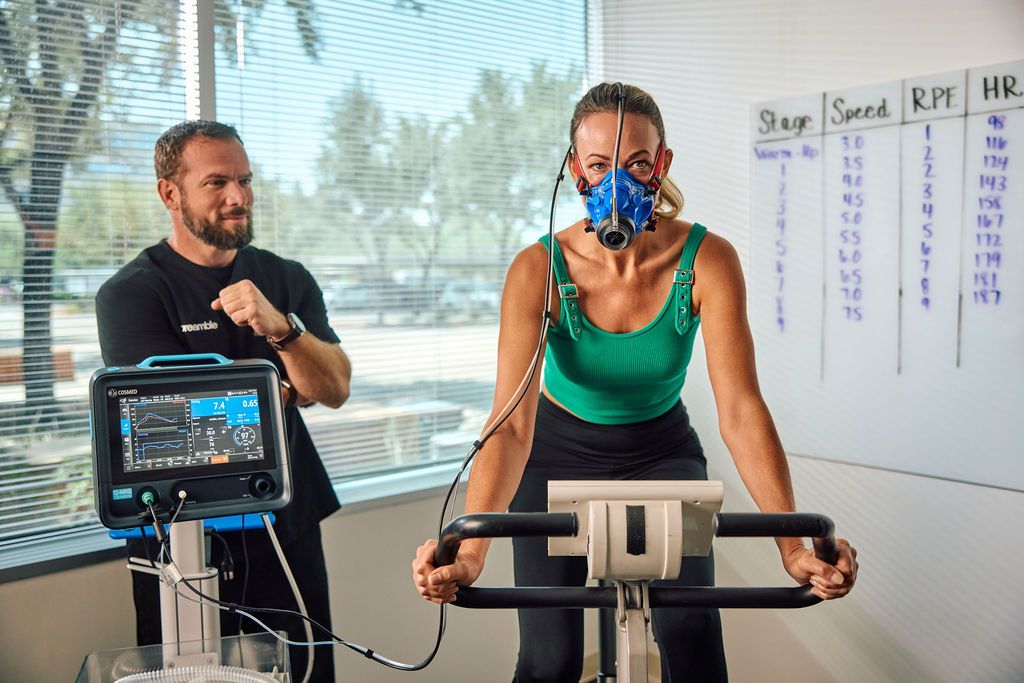
At Preamble in Scottsdale, the VO2 Max test is conducted using a precise, hospital-grade metabolic analyzer. You’ll wear a mask that captures every breath as you walk, jog, or cycle through a gradually intensifying ramp protocol. The machine measures how much oxygen you inhale, how much carbon dioxide you exhale, and how your body shifts between burning fat and carbohydrates.
The result isn’t just a score. It’s a personalized report that includes your aerobic and anaerobic thresholds, heart rate training zones, metabolic efficiency, and peak cardiovascular performance. It serves as your physiological fingerprint—a clear view into how your body produces and uses energy.
If you’re unfamiliar with the process, explore What to Expect During a VO2 Max Test in Scottsdale for a full breakdown.
This data becomes the foundation for your training strategy, giving you a performance map that helps you train smarter, not just harder.
Building Personalized Health Plans from Your VO2 Max
Once your VO2 Max has been measured, it’s time to transform that data into action. A personalized health plan uses your test results to guide your path forward—rather than relying on guesswork or generic fitness advice.
For example, your VO2 Max test will identify your unique heart rate zones. Instead of relying on age-based formulas, you’ll have accurate data about when your body is burning fat efficiently, when it’s transitioning into anaerobic output, and where your performance ceiling lies. Training in the right zone improves results while reducing the risk of injury and burnout.
But cardiovascular training is just one element. A comprehensive plan also accounts for your resting metabolic rate, body composition, stress levels, nutrition, and recovery capacity. At Preamble, these factors come together in the Medicine 3.0 Executive Physical, a full-spectrum diagnostic and optimization program.
This advanced offering integrates VO2 Max testing with DEXA body scans, inflammatory markers, hormone labs, and respiratory exchange ratios (RER). From there, a physician-led team crafts a roadmap built around your physiology and goals—whether that means reversing early signs of metabolic dysfunction or supporting high-level athletic longevity.
A well-designed plan evolves over time. It doesn’t overload your system or create unrealistic expectations. It adapts based on how your body responds—something only possible with regular data review and medical oversight.
Lifestyle Factors That Support VO2 Max Gains
Improving VO2 Max is a function of stress, adaptation, and recovery. And that means your lifestyle plays a central role in your progress.
Train with Purpose
Aerobic capacity improves when your workouts challenge your cardiovascular system within specific parameters. Two protocols in particular are proven to enhance VO2 Max:
- Zone 2 cardio: This is low-to-moderate intensity movement sustained for 30–60 minutes. It increases mitochondrial density and fat oxidation, which are essential for aerobic endurance and energy metabolism.
- HIIT (High-Intensity Interval Training): Short bursts of near-max effort followed by active recovery. HIIT enhances stroke volume (how much blood your heart pumps per beat) and boosts overall VO2 Max when performed a few times per week.
Resistance training also supports VO2 Max indirectly by improving muscle strength, insulin sensitivity, and total-body metabolic output.
Fuel the System
Your heart and lungs may be the delivery mechanism, but your mitochondria are doing the work. Optimal VO2 Max development requires proper nutrition, including:
- High-quality protein to repair muscle tissue and support lean mass.
- Slow-digesting carbohydrates to fuel training without spiking insulin.
- Essential fats and micronutrients like magnesium, B vitamins, and CoQ10, which support mitochondrial function and oxygen utilization.
A nutrition plan customized to your metabolism will support the energy demands of training while preventing overreaching or recovery delays.
Recover Intelligently
Sleep is when your cardiovascular system rebuilds. Chronic stress elevates cortisol, constricts blood vessels, and suppresses aerobic adaptation. Your plan should include built-in strategies for sleep optimization, mindfulness, and parasympathetic recovery—especially if you’re juggling work, family, and training commitments.
For more on how metabolic efficiency and VO2 Max intersect, read VO2 Max Testing and Metabolic Health Connection.
Preventive Benefits of VO2 Max Optimization
Improving VO2 Max isn’t just about performance. It’s one of the most strategic moves you can make for preventive health.
As your VO2 Max improves, you’re enhancing more than endurance—you’re increasing oxygen delivery to tissues, improving vascular flexibility, and supporting efficient fat metabolism. This reduces systemic inflammation, regulates blood sugar, and bolsters cognitive function—all of which lower the risk of chronic disease.
VO2 Max also serves as an early warning system. A sudden decline can signal underlying cardiovascular or respiratory issues before they appear on traditional labs. That’s why clinicians increasingly use VO2 Max as a frontline screening tool for metabolic and heart health.
To learn more about this clinical application, visit Why VO2 Max Testing Matters for Disease Prevention.
This proactive approach means that VO2 Max becomes more than a number—it becomes your personal radar for emerging health challenges.
Staying Accountable with Data-Driven Adjustments
Training and improvement don’t happen in a vacuum. Without ongoing data, it’s easy to plateau or regress. That’s why retesting VO2 Max every 3–6 months is a vital part of any personalized plan.
These retests don’t just measure success—they fine-tune your strategy. They tell you whether your body is adapting or overreaching, whether your current training zones still apply, and where adjustments are needed. They also help identify lifestyle bottlenecks—like poor sleep, stress, or nutrient deficiencies—that may be holding back your progress.
Accountability matters, too. Whether you’re working with a coach, a physician, or tracking your progress through a digital dashboard, objective data is your best defense against stagnation and frustration. At Preamble, your testing isn’t a one-and-done experience—it’s part of a system of continuous health intelligence and support.
Retesting also keeps you motivated. Watching your VO2 Max improve isn’t just satisfying—it’s a direct indicator that your long-term health trajectory is on the rise.
Long-Term Wellness Requires a Personalized Plan
VO2 Max is more than a fitness metric. It’s a biological reflection of how well your body handles stress, delivers oxygen, and sustains energy output. It’s also one of the most potent predictors of healthspan—and it’s entirely modifiable with the right support.
But no single workout, supplement, or tactic can improve it in isolation. The real breakthroughs happen when data meets strategy. That’s where personalized health plans shine. They integrate your physiology, lifestyle, and goals into a roadmap for sustainable change—and they adapt as you do.
Whether you’re looking to prevent disease, improve stamina, or simply feel better day to day, VO2 Max training offers a science-backed path forward.
Take the first step toward a smarter, stronger future. Book a Discovery Call and build a personalized plan designed for long-term wellness.